Petrushka
The DoublePetrushka, the servant of Yakov Petrovitch Golyadkin, is a minor but consequential figure whose ordinary household duties become entangled with his master’s growing distrust. He moves between work, gossip, and silence; Golyadkin interprets each in turn as a possible sign of disloyalty. His most striking effect is therefore not a single decisive act, but the way his independent presence makes Golyadkin’s private fears seem to acquire witnesses and agents in the outside world.
Identity and Introduction
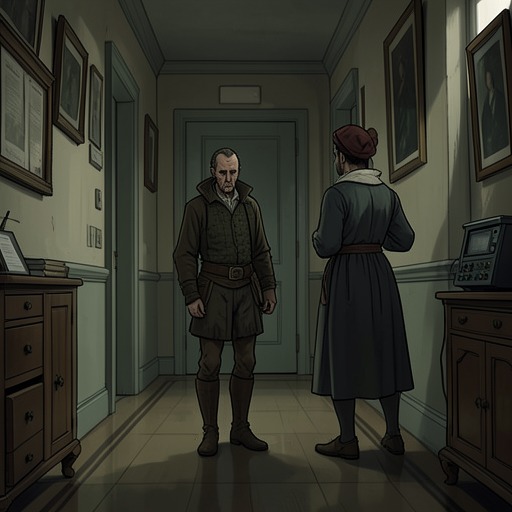
Petrushka is Golyadkin’s domestic servant, responsible for attending to him and carrying out practical errands. Early in the narrative, Golyadkin hears him say that something is boiling and ready, then grows impatient at the delay. When he goes into the hall, however, he finds Petrushka surrounded by a sizable group of lackeys from outside and from the flats in the house. Petrushka is telling them something while they listen. The narrator does not disclose what he is saying, but Golyadkin dislikes the scene and promptly summons him back to the room, already suspecting that he has been sold out.
The episode establishes a gap between Petrushka’s observable conduct and Golyadkin’s interpretation of it. The servant is talking with other servants; his master turns that ordinary exchange into evidence of betrayal. When the livery arrives, Golyadkin orders Petrushka to put it on and come to him, returning their relation to the immediate routine of service without resolving the suspicion that has arisen in the hallway.
The Double’s Arrival and the Night at Home
Petrushka’s most consequential appearance comes when Golyadkin pursues a stranger into the building and up the dark, refuse-strewn stairs. The stranger runs as if familiar with the place, reaches Golyadkin’s door, and knocks. Petrushka opens it at once, candle in hand, and follows the visitor inside. Golyadkin then finds the stranger sitting on his bed in a hat and coat: the man is another Golyadkin, identical to the first. Petrushka’s prompt opening of the door is a concrete detail in the scene, but the narrative does not explain whether he expected the visitor or knew who he was. For Golyadkin, already overwhelmed by the sight of his double, the moment makes his own home seem implicated in the inexplicable arrival.
Later, Petrushka speaks from behind the screen in words that turn Golyadkin’s fear into an accusation about character. He says he will go to good people, who live honestly and without falsity, and adds that such people never have doubles. He repeats that God does not afflict honest folk. Golyadkin calls him worthless and drunk, orders him to sleep, and threatens that he will catch it tomorrow. Petrushka mutters further, gets into bed, yawns, and falls asleep. His speech is pointed enough to unsettle his master, but it is still the speech of a drunken servant; Golyadkin himself recognizes this as a reason not to trust it, even as he is shaken by its insinuation.
That night, Golyadkin turns the servant’s remarks into part of a wider crisis. He reproaches himself for having written a letter and calls himself his own enemy, then reaches for a letter lying on the table. The sequence links Petrushka’s remarks to Golyadkin’s anxious interpretation of events without proving that Petrushka knows the full story or is acting as part of a plot.
Absence, Suspicion, and Official Consequences
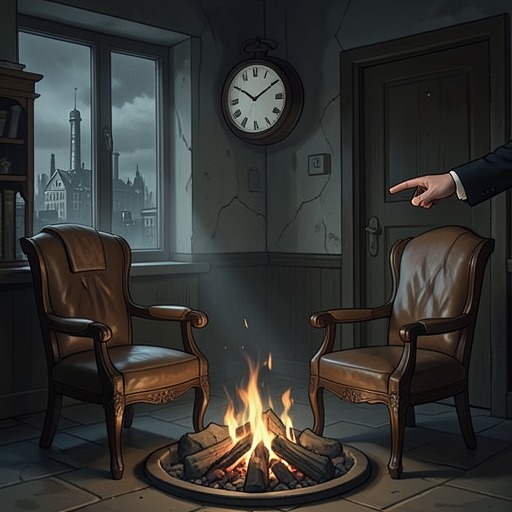
After a sleepless, disturbed night, Golyadkin wakes to an unusually bright room and hears the clock strike once. It is one o’clock. Petrushka’s bed has been made and left; his boots are gone, and the room no longer bears signs of his presence. Golyadkin also discovers that the letter he had written to Vahramyev is missing. From those absences he concludes that Petrushka has been bribed. He then imagines that a conspiracy has been laid in a German woman’s establishment and connects it to the double’s appearance. These are Golyadkin’s conclusions, not independently verified facts: the narrative presents the empty bed and missing letter, while showing how quickly he turns them into a comprehensive explanation.
Petrushka’s absence coincides with an official blow. An attendant from the office brings an envelope containing instructions, signed by Andrey Filippovitch, for Golyadkin to hand over his business to Ivan Semyonovitch. When Golyadkin returns to the flat, he sees Petrushka gathering his belongings into a heap. The servant appears to be preparing to leave for the flat of Karolina Ivanovna, who has persuaded him to take the place of Yevstafy. The scene gives his departure a practical explanation, even as Golyadkin’s earlier theory of bribery continues to shape how he experiences it. The office’s action and the servant’s apparent move occur amid the consequences of the previous day, but the text does not establish that Petrushka caused the official decision.
Separation and Final Errands
When Golyadkin asks the time, Petrushka goes behind the partition and returns to say it is nearly half-past seven. Golyadkin then announces that everything is over between them and asks where the servant has been. Petrushka answers with news of an elopement and marriage in another house, then says that Golyadkin has a powerful rival. Rumour, he explains, is everywhere. His announcement introduces a new alarm into the conversation, but the evidence does not establish how he learned the details or how reliable his account is.
Golyadkin accepts Petrushka’s assistance and asks what to do. Petrushka responds in the idiom of household necessity: he recommends buying sheets, pillows, a double feather bed, a quilt, and a fox-fur cloak from the downstairs shopkeeper. Golyadkin agrees to the purchases and repeatedly urges him to hurry. Petrushka gathers linen, pillows, a quilt, sheets, and other odds and ends into a bundle and rushes out. The intended arrangements do not settle into a clear plan. Golyadkin cannot read the letter he is holding; hearing noise and argument downstairs, he retreats to the sofa, then puts on his goloshes, hat, and greatcoat, takes his papers, and runs out himself.
On the stairs he meets Petrushka and tells him that he will manage alone for the time being, perhaps until matters take a better turn. He then runs into the yard without having decided what his position is or what he should do. Petrushka’s final presence is thus both practical and inconclusive: he has gathered the requested bedding, yet Golyadkin abandons the errand and the domestic space in a state of confusion.
Narrative Role
Petrushka is shown through actions that remain partly independent of Golyadkin’s explanations: talking with other servants, opening the door, sleeping after a drunken exchange, leaving the flat, and carrying out errands. Golyadkin repeatedly converts those actions into signs of conspiracy, rejection, or impending disgrace. The contrast gives the servant a limited but important narrative function. He supplies concrete details—the missing boots, the emptied bed, the bundle of linen—while Golyadkin’s interpretation of those details grows more expansive and unstable. Petrushka’s guarded silences do not resolve the mystery; instead, they leave the boundary between ordinary household change and the master’s persecutory suspicions unsettled.